
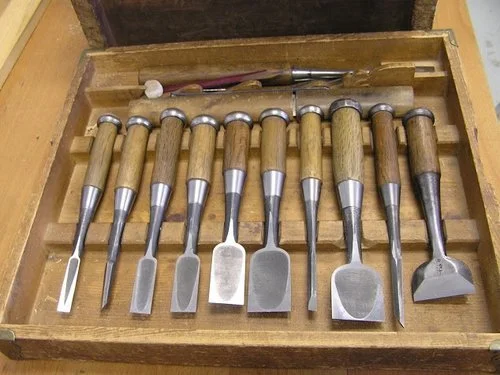
Japanese Tools
5 Days, For Beginners
Fall 2026
October 26-30
Class size: 10
Cost: $1,070
Materials: $75
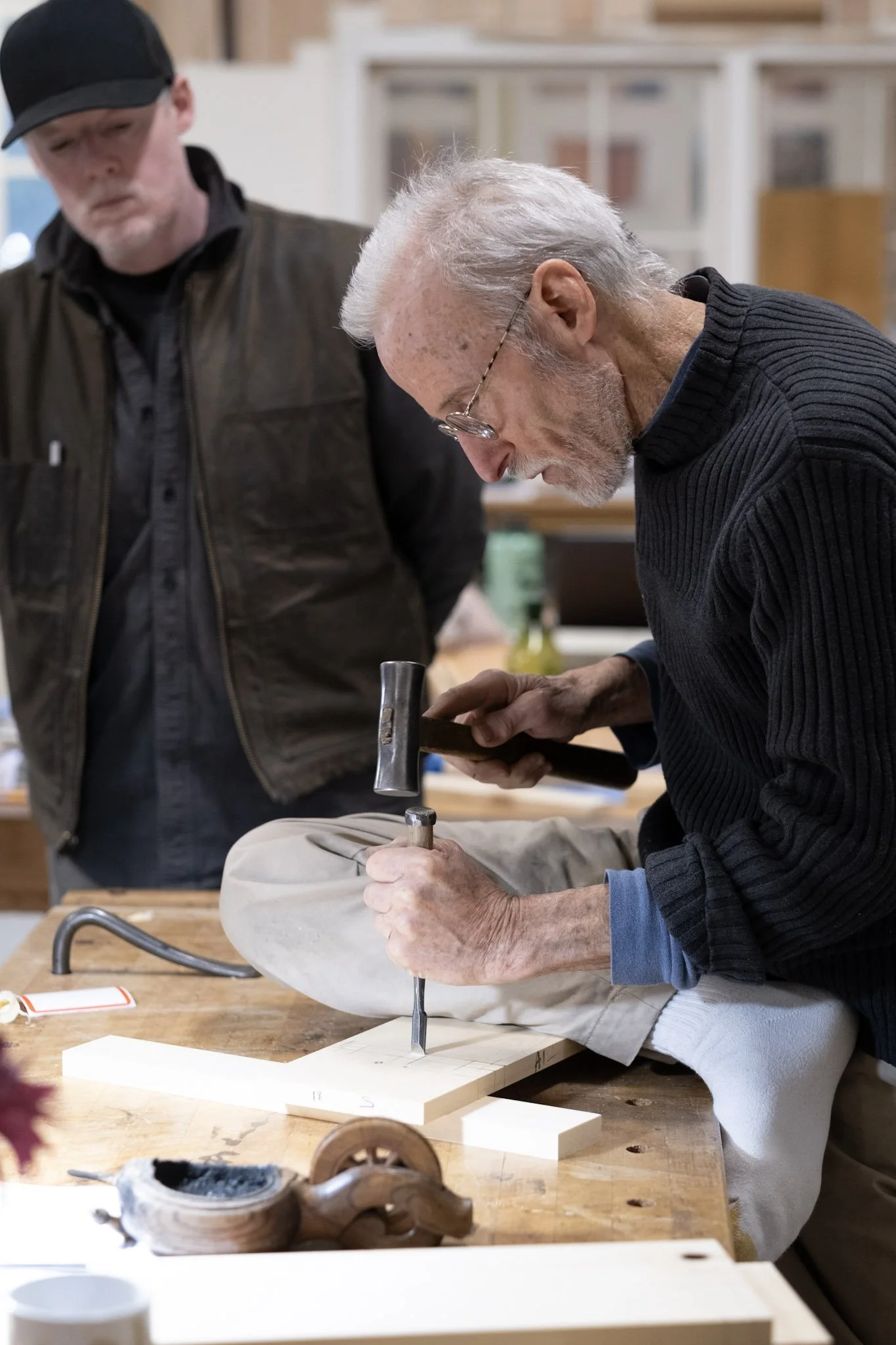
This five-day class will be a hands-on workshop focused primarily on the sharpening and setting up of traditional Japanese chisels and hand planes. These are foundational skills rooted in the Japanese tradition of woodworking, yet can be readily applied to any genre of woodworking. The course will be packed with details that usually require a lengthy apprenticeship to learn. There's a lot to cover, so bring tools, hands, and be ready to work!
Please read the Student Greeting from Dale Brotherton. It has important information about purchasing tools and making good decisions, as well as specifics about chisels, planes, saw blades, etc. You'll find links to recommended tool dealers on the second page. Dale advises you to purchase and/or acquire tools early.
You will be taught the fundamentals for setting up and using Japanese hand tools for use in cutting traditional joints. This class is a prerequisite to Dale’s Tansu class.
The class project will be a tool tray with a joined handle. Pre-milled materials will be provided.
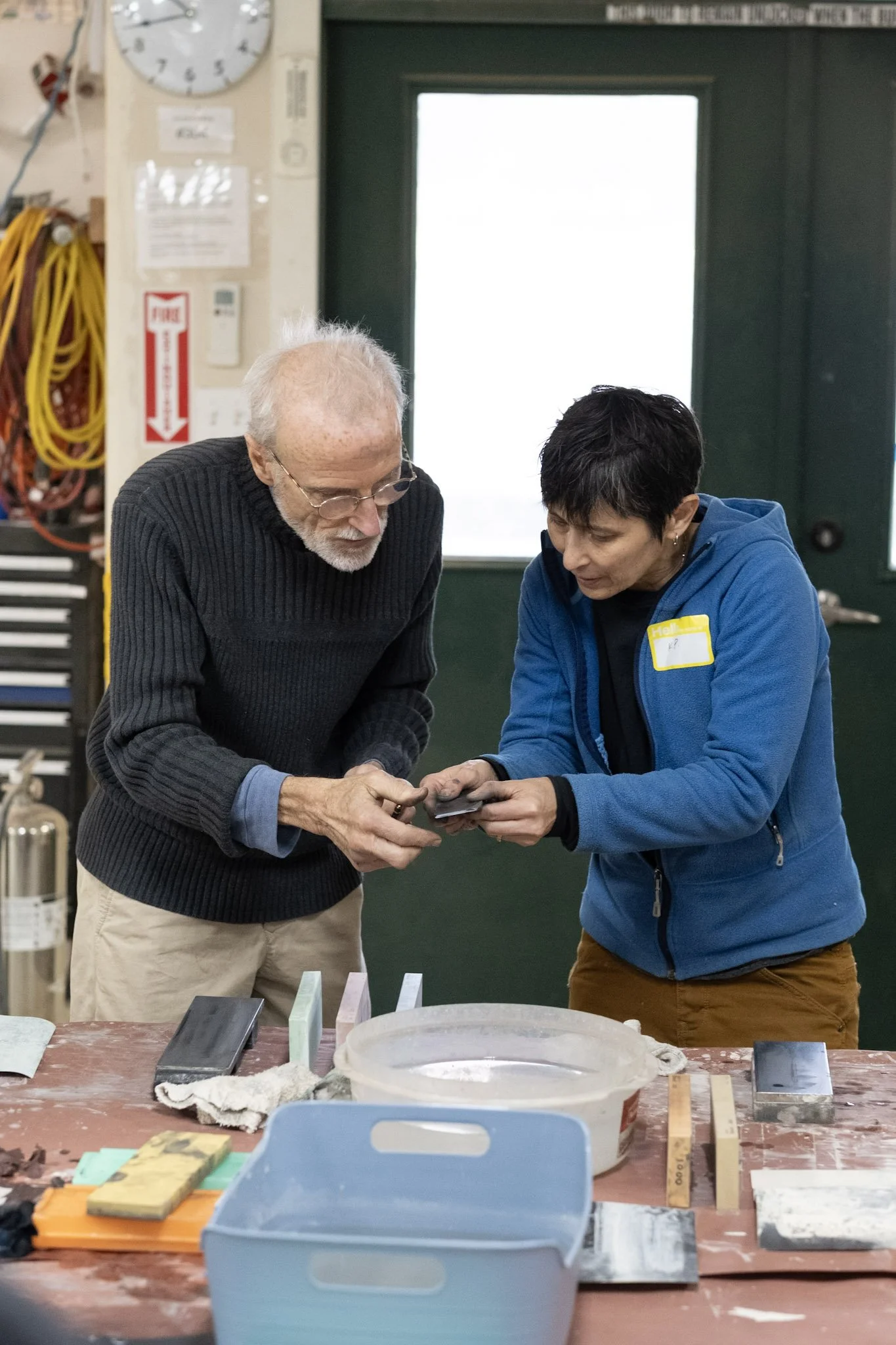
In this five-day course, we'll start by tuning up your waterstones. We’ll then learn basic setup and sharpening techniques on your own chisel. We cover removing and resetting the handle, fitting the handle ring, preparing the back, dealing with the hollow ground, blade angles, and subtleties of honing with Japanese waterstones. Sharpening is done by hand with no guides in the traditional manner.
Next, we move into the hand plane, first learning to flatten the back using the uradashi technique of forming the blade with a hammer and an anvil. Then we’ll progress to honing on a steel plate for perfect accuracy, followed by finishing, sharpening, and trimming the blade as necessary. Next, the chip breaker is carefully shaped, honed, and fit to the main blade. With the blades ready, the block is trimmed as needed and fit with the blades. A scraper plane can then be set up and used to shape the plane base to the proper contours. Finally, we’ll learn how to micro-adjust the blade settings and make shavings!
With our tools in shape, we begin discussing wood grain types and proper orientation. The layout of parts for our project, which includes wedged mortise and tenons. We'll cover basic chisel techniques while cutting out mortises by hand. After that, we'll use Japanese handsaws for cutting our tenons. Final trimming and tenon shoulder adjustments will come next, followed by hand planing to finish the surfaces. Lastly, we’ll assemble the parts, drive in wedges, and execute final trimming. Don't bring glue, you won't need it!
Note: Even though the tool tray is a fairly simple project, setting up the tools and entirely hand woodworking go slowly for beginners. Therefore, it is likely that students will go home with their project incomplete. In such cases, adequate instruction to finish at home will be provided.
Tools
Required
Here is a link to the Japanese Class Tool List that you can print out.
Prerequisites
For beginners. This class will give you the fundamentals for setting up and using Japanese hand tools. This class is a prerequisite for the Tansu class.
Note: This training is physical and demands a lot of the body. You'll be doing a great deal of hand sharpening, which can tax finger, hand, and arm strength. It’s also dirty. Sharpening paste can stain hands and clothes. If you have concerns, please reach out to us, and we'll talk it through.
Course Information and Registration
Classes run 9:00 am to 5:00 pm Monday through Friday in Building 304 at Fort Worden. Map. Read our What to Expect page for general information about the school and our course Registration Policy. We highly encourage you to sign up for the waitlist if the course is full.
Japanese Carpentry
Seattle, WA